
Townson 11.4m Sedan Cruiser
Price
NZ $495,000
Currency
Length
37' 5" - 11.40m
Vessel Location
Auckland NORTH ISLAND
Launch Year
2025
Hull Material
Composite
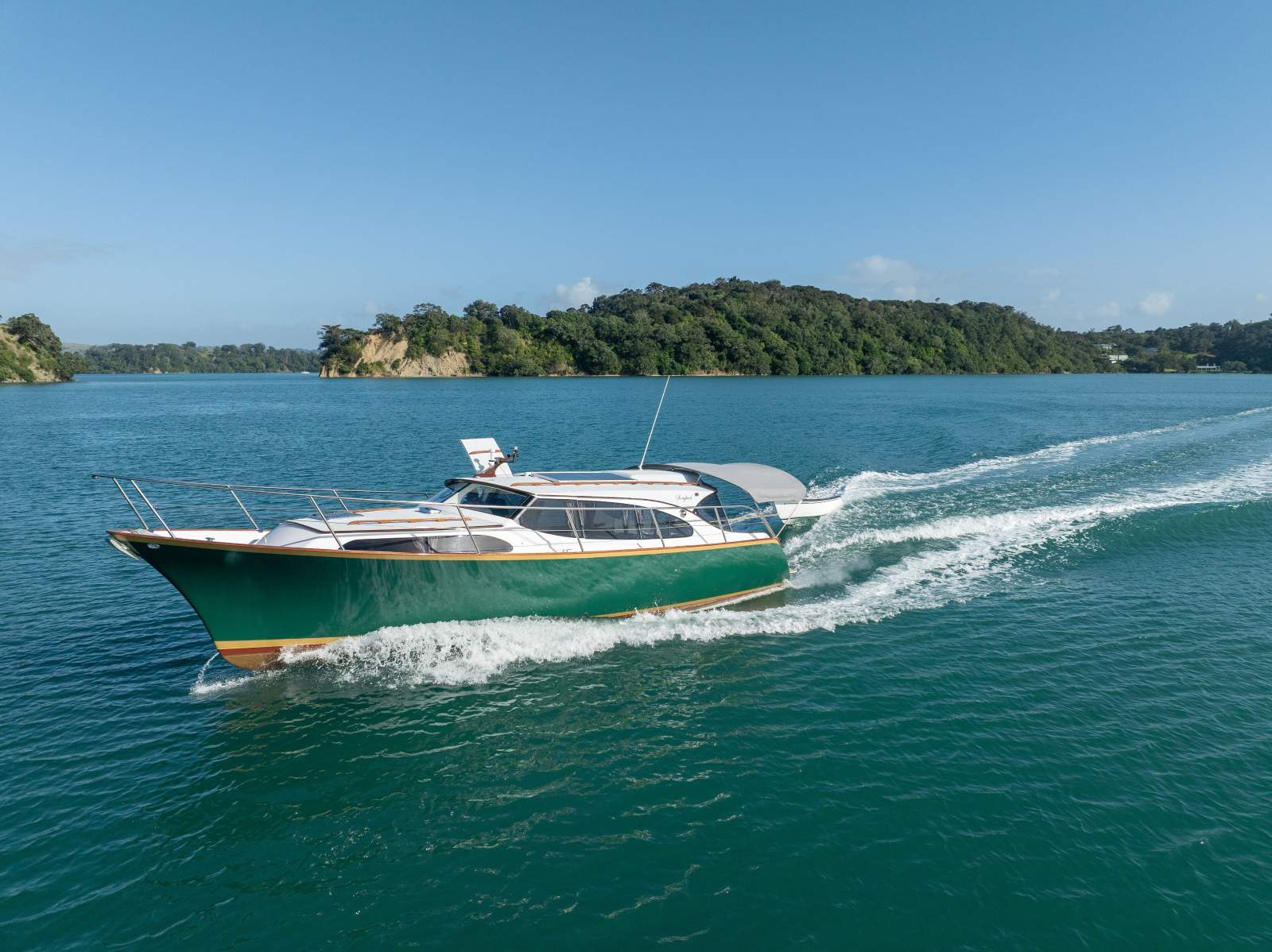
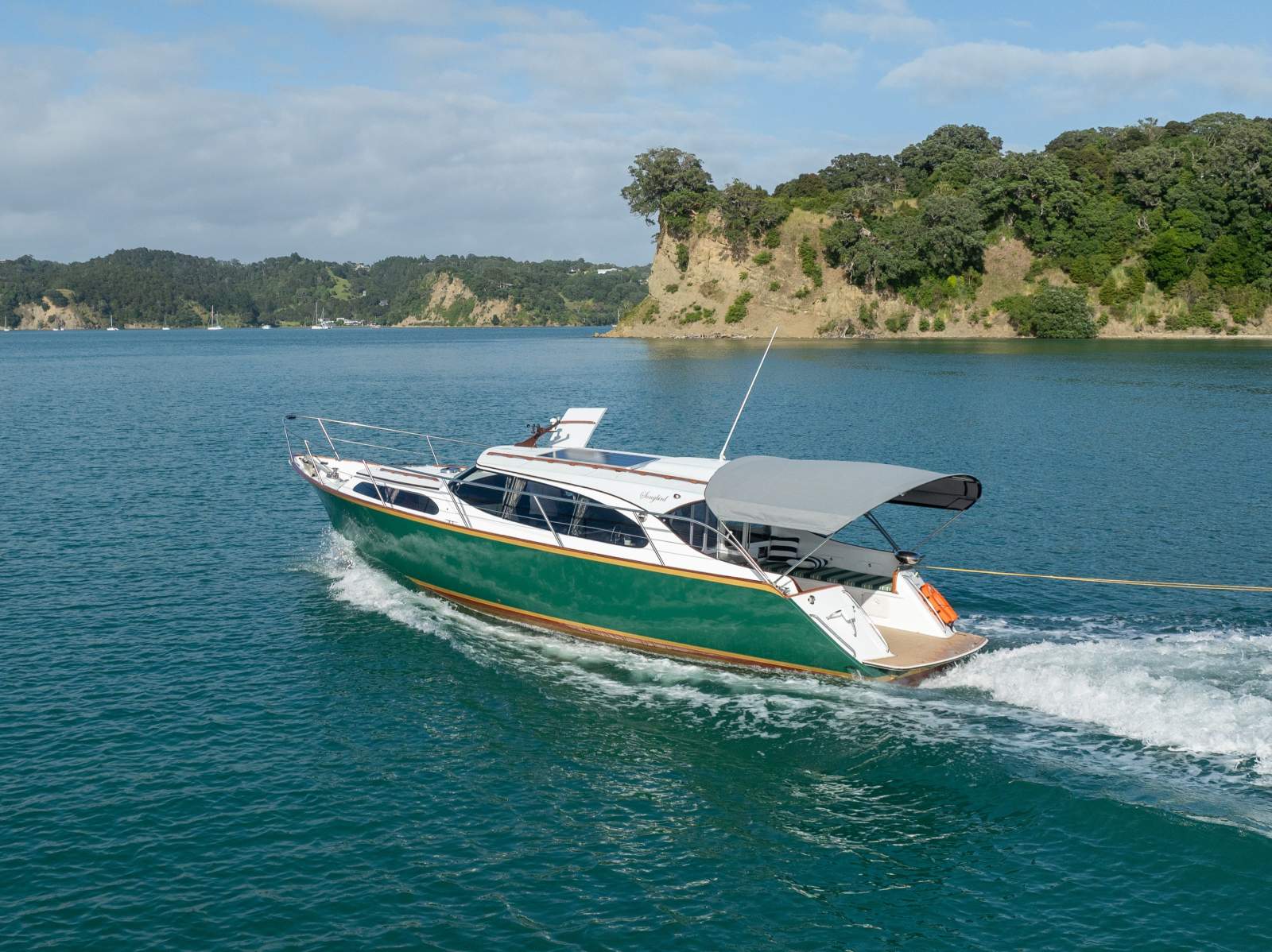


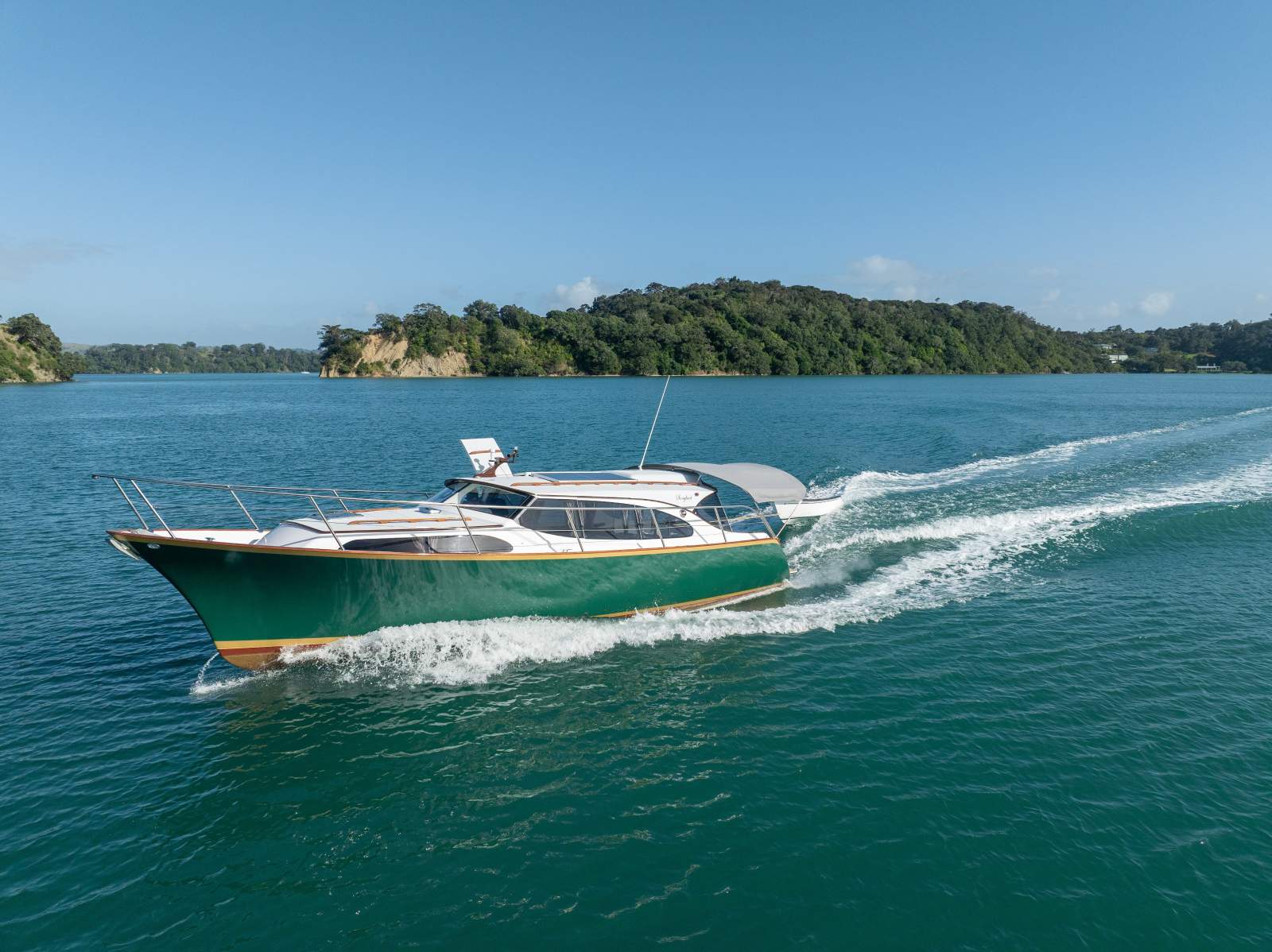


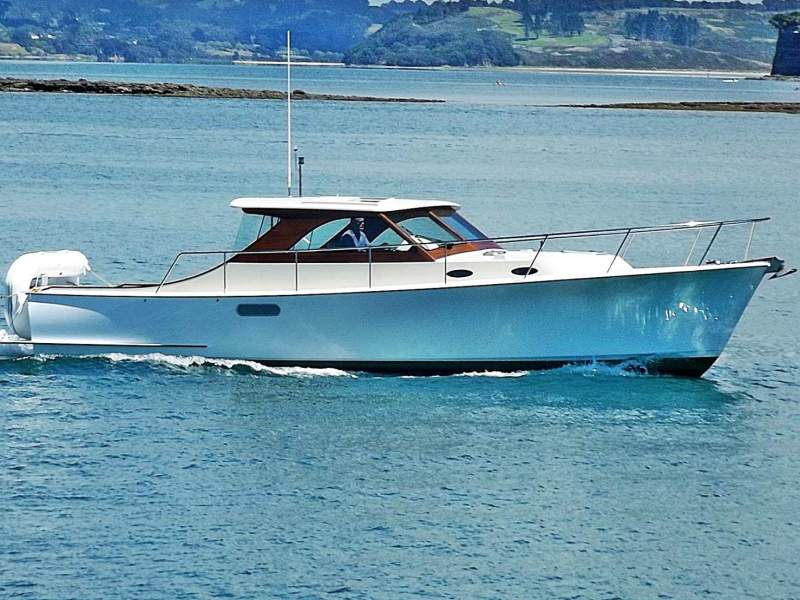
Busfield Marine is proud to be marketing Songbird, a Bill Townson design/build that was launched late 2025 and can be best described as a yachtsmans launch. Construction is kauri/cedar West epoxy system. The 110Hp Yanmar diesel on shaft gives a comfortable 8 knot cruise with a top speed of 13 knots. Bill, with a lifetime of experience designing, sailing and boat building, has created something special and unique, an ideal launch to cruise the New Zealand coastline in style and comfort.
Price
NZ $495,000
Launch Year
2025
Length
37' 5" - 11.40m
Beam
3.7 m
Draft
0.9 m
Displacement
5900 kg
Vessel Location
Auckland North Island
Region
North Island
Use
Cruising
Designer
Bill Townson
Builder
Bill Townson
Hull Material
Composite
Engine
Yanmar 4JH4-HTE 2Ltr turbo charged Marine diesel producing 110HP at 3200RPM
Cooling is via freshwater coolant heat exchanged to salt water discharged through exhaust system.
Note: saltwater intake can be switched to fresh via a branch valve to water tanks for final flush when engine is not to be used for a period.
Gear box is ZF30m with 2.64 reduction.
Above assembly is rubber mounted and connected to prop shaft via two CV joints
Propeller shaft is 38mm diam. Avesta stainless steel mounted to a 'Y' strut at lower end and spherical flange mount thrust bearing at the top end. A stern tube of fiberglass with plastic bushes through the hull has double lip seals at inner end and engine cooling water is introduced behind these seals
Propeller is a 3blade 23.5 X 18 RH Nibral Bri-ski.
Shaft and propeller are protected by a shaft mounted Zinc anode. The strut, pintle and 'fence' are wired internally to a separate dome anode just ahead of the strut
Engine Make
Yanmar
Number Engines
1
Horsepower
110
Fuel Type
Diesel
Engine Hours
40
Fuel Consumption
5.5 l/hr at 8 knots 2000 rpm
Max Speed
13 knots
Cruise Speed
8 knots
Propulsion
Inboard Shaft Drive : Propeller shaft is 38mm diam. Avesta stainless steel mounted to a 'Y' strut at lower end and spherical flange mount th
Thrusters
Bow Thruster : A Vetus 150mm 55KGF bow thruster is mounted under forward vee berth in focsle.
Fuel
600
Dinghy
A 2.8m lightweight composite hard chine rowing dinghy includes a 3.3 Hp Mercury Outboard.
Accommodation
Interior layout (from forward aft. )
A large anchor well opens to the foredeck and provides a chain locker below a shelf for the rope extension and fenders. It also houses the anchor winch motor and a spurling pipe guides the chain below. This whole area drains directly overboard at the waterline.
Two single vee berths in focsle with full length mirror on the aft end bulkhead. A central step aids egress through the large hatch above. The head door folds back to close of the focsle for privacy as required. There are two multi LED reading lights at the head of each berth. A handy shelf runs at half eight above each berth. The flux gate compass is mounted at the rear of the starboard shelf.
Head (port side
Incorporates an Electric toilet and ~120litre holding tank, vanity basin with pull up Hot and Cold single lever font which doubles as a shower rose. This whole area has a sealed floor and drain to a dedicated pump to discharge shower water overboard. A large mirror provides an impression of spaciousness. Two Multi LED swivel lights illuminate this area.
Passage (opposite head to starboard)
Opposite the head area, is a dresser with locker space behind and below. The aft side of this space is a cabinet giving access to the plotter computer and rear of the helm dashboard. On the front face is a panel of 16 Circuit breaker switches and gauges of the electrical distribution system. Below is a hanging locker the rear of which houses the Autopilot control and the subwoofer audio amplifier.
A single multi LED swivel light illuminates this area.
Main saloon
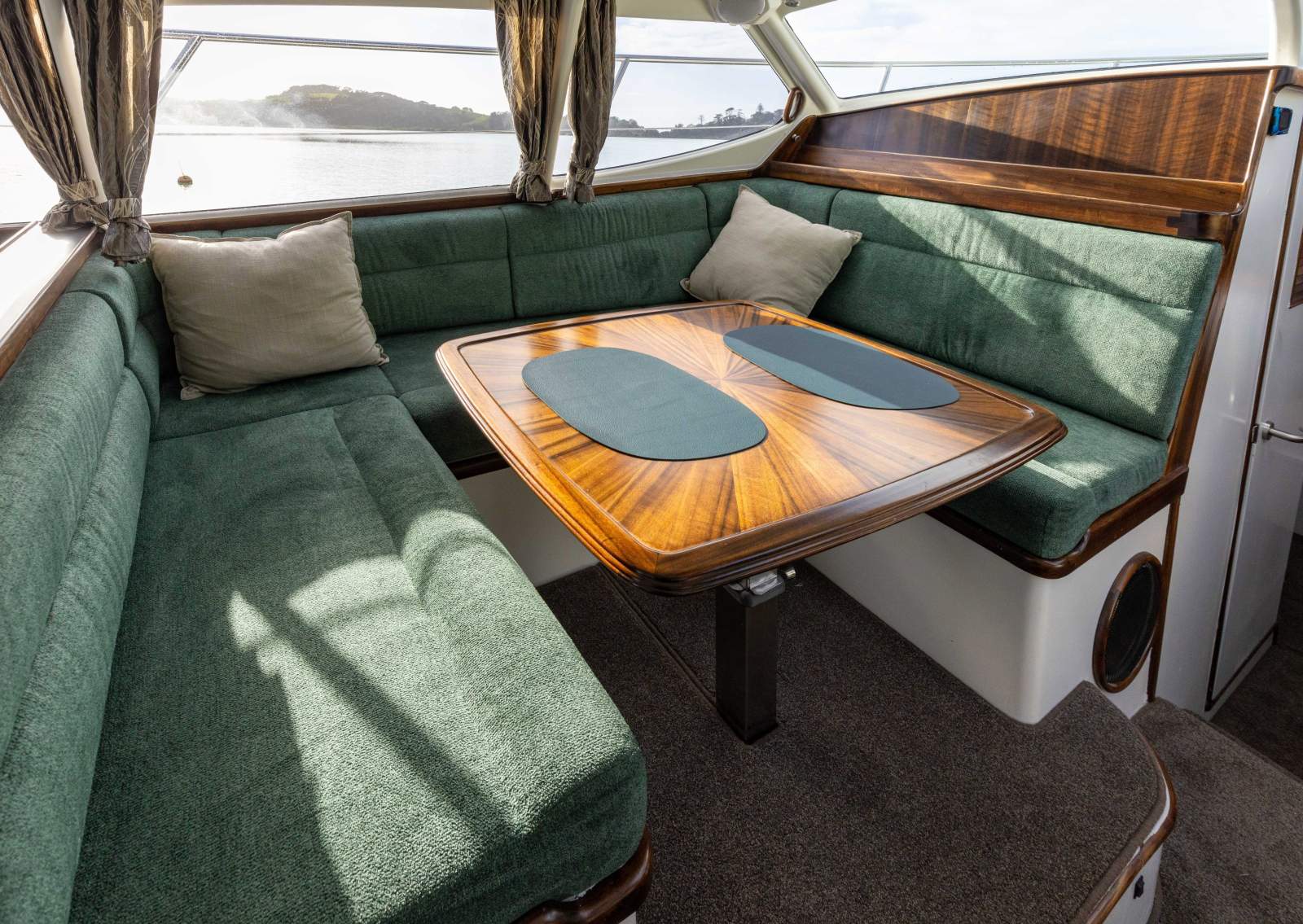
To port is a dinette with inlaid walnut table. The forward side window slides back for ventilation. Lockers behind the backrest house the diesel heater and additional storage below. The table is mounted on a telescoping pedestal with an internal electric drive to allow lowering of the table to form a double bed of the seating area.
The forward end of the dinette seating folds up and back to provide two elevated forward facing seats for passengers when underway. A shelf on the bulkhead in front is useful for such occupants to rest coffee cups etc. The 300mm subwoofer speaker is mounted in the end of this seat facing the helm station and the rear of this speaker is closed in and sound insulated within the seat locker.
The Helm station is forward to starboard with a single high back chair which rotates and slides fore and aft. A sliding door with steps and an overhead hatch provide easy access to side deck. Several foot rests below helm wheel give comfort to differing heights of helmsman. A removable padded seat clips onto side deck in door opening providing good visibility forward when maneuvering in tight areas.
A single bunk extends aft of the helm seat with large drawers underneath and lockers behind backrests.
The engine is located under the rear seat of the dinette and an Isotemp 40L hot water cylinder under the port side floor ahead of the engine.
A lift up flap under the table adjacent to the passageway gives access to the lowest section of the bilge, and its pump. The primary diesel filter and water trap is located in this compartment together with the fresh water pump, pressure accumulator, primary fresh water filter, water tank selector valves and engine flush valve. This is also the pick-up point for the manual diaphragm water pump under the port cockpit seat. The high pressure wash-down pump and the 10Litre supplementary diesel heater tank and pump are also located here. The latter is filled via a two-way valve on the engine return line system.
A large anchor well opens to the foredeck and provides a chain locker below a shelf for the rope extension and fenders. It also houses the anchor winch motor and a spurling pipe guides the chain below. This whole area drains directly overboard at the waterline.
Two single vee berths in focsle with full length mirror on the aft end bulkhead. A central step aids egress through the large hatch above. The head door folds back to close of the focsle for privacy as required. There are two multi LED reading lights at the head of each berth. A handy shelf runs at half eight above each berth. The flux gate compass is mounted at the rear of the starboard shelf.
Head (port side
Incorporates an Electric toilet and ~120litre holding tank, vanity basin with pull up Hot and Cold single lever font which doubles as a shower rose. This whole area has a sealed floor and drain to a dedicated pump to discharge shower water overboard. A large mirror provides an impression of spaciousness. Two Multi LED swivel lights illuminate this area.
Passage (opposite head to starboard)
Opposite the head area, is a dresser with locker space behind and below. The aft side of this space is a cabinet giving access to the plotter computer and rear of the helm dashboard. On the front face is a panel of 16 Circuit breaker switches and gauges of the electrical distribution system. Below is a hanging locker the rear of which houses the Autopilot control and the subwoofer audio amplifier.
A single multi LED swivel light illuminates this area.
Main saloon
To port is a dinette with inlaid walnut table. The forward side window slides back for ventilation. Lockers behind the backrest house the diesel heater and additional storage below. The table is mounted on a telescoping pedestal with an internal electric drive to allow lowering of the table to form a double bed of the seating area.
The forward end of the dinette seating folds up and back to provide two elevated forward facing seats for passengers when underway. A shelf on the bulkhead in front is useful for such occupants to rest coffee cups etc. The 300mm subwoofer speaker is mounted in the end of this seat facing the helm station and the rear of this speaker is closed in and sound insulated within the seat locker.
The Helm station is forward to starboard with a single high back chair which rotates and slides fore and aft. A sliding door with steps and an overhead hatch provide easy access to side deck. Several foot rests below helm wheel give comfort to differing heights of helmsman. A removable padded seat clips onto side deck in door opening providing good visibility forward when maneuvering in tight areas.
A single bunk extends aft of the helm seat with large drawers underneath and lockers behind backrests.
The engine is located under the rear seat of the dinette and an Isotemp 40L hot water cylinder under the port side floor ahead of the engine.
A lift up flap under the table adjacent to the passageway gives access to the lowest section of the bilge, and its pump. The primary diesel filter and water trap is located in this compartment together with the fresh water pump, pressure accumulator, primary fresh water filter, water tank selector valves and engine flush valve. This is also the pick-up point for the manual diaphragm water pump under the port cockpit seat. The high pressure wash-down pump and the 10Litre supplementary diesel heater tank and pump are also located here. The latter is filled via a two-way valve on the engine return line system.
Galley
To port is U shaped incorporating a Thetford 3 burner gas stove with a glass splash back lid, with oven and grill below. A plate rack above incorporates a range hood with an LED strip light and an electric exhaust fan mounted beneath. A BEP gas detector is mounted on the front of this cabinet and controls the gas bottle solenoid. Of the two sensors one is located under the back of the stove and the other next to the starter motor on the engine.
Two drawers below the stove are for general culinary items.
A top opening bin forward of the stove with a large general stowage area below. A flush bench sink incorporating a pull-up hot and cold font, a one micron filtered flexible font and a flexible salt water rinsing font behind.
Beneath this bench are two cutlery drawers and below that again a warming cupboard using engine heat to dry clothing etc.
On the aft side of the 'U' the bench continues and extends out into the cockpit area via demountable bi-fold glazed doors. Below this bench three drawers the lower of which have removable veggie or fruit baskets in the path of the engine intake air from a large louvre in the rear of the cabinet opening into the cockpit area. Alongside and outboard is a top hinged flap door accessing the 'kitchen tidy' bin below. This bin has a bin liner and is removable from the cockpit.
Opposite the 'U' galley on starboard is more bench area with a 130Litre fridge aft three drawers. Above drawer cabinet is the CD player. This unit feeds 4 speakers on two banks mounted high in each corner of the saloon area producing stereo audio effect. Above the bench area, on an articulating arm is a Flat screen TV with built in DVD player.
Overhead there is one large very bright customized COB light over the dinette table and two smaller COB lights over each of the galley and fridge benches. In addition, there is a multi LED in each corner of the Saloon. An LED strip light is housed in the range hood to illuminate the stove top.
The two bifold doors for
Two drawers below the stove are for general culinary items.
A top opening bin forward of the stove with a large general stowage area below. A flush bench sink incorporating a pull-up hot and cold font, a one micron filtered flexible font and a flexible salt water rinsing font behind.
Beneath this bench are two cutlery drawers and below that again a warming cupboard using engine heat to dry clothing etc.
On the aft side of the 'U' the bench continues and extends out into the cockpit area via demountable bi-fold glazed doors. Below this bench three drawers the lower of which have removable veggie or fruit baskets in the path of the engine intake air from a large louvre in the rear of the cabinet opening into the cockpit area. Alongside and outboard is a top hinged flap door accessing the 'kitchen tidy' bin below. This bin has a bin liner and is removable from the cockpit.
Opposite the 'U' galley on starboard is more bench area with a 130Litre fridge aft three drawers. Above drawer cabinet is the CD player. This unit feeds 4 speakers on two banks mounted high in each corner of the saloon area producing stereo audio effect. Above the bench area, on an articulating arm is a Flat screen TV with built in DVD player.
Overhead there is one large very bright customized COB light over the dinette table and two smaller COB lights over each of the galley and fridge benches. In addition, there is a multi LED in each corner of the Saloon. An LED strip light is housed in the range hood to illuminate the stove top.
The two bifold doors for
Ground Tackle
Electric Maxwell anchor windlass
35lb Manson plough with 30m chain and rode
35lb Manson plough with 30m chain and rode
Electrics
Two banks with individual heavy duty master switches plus a third interconnecting switch between banks for emergencies.
Start bank is a 12V Century 1000cca sealed
House bank two 12V Century 130AH FLA in parallel. (Total 12v 260 AH)
- Engine driven regulated 125AH Alternator
-Two 220Watt split solar panels on the main cabin top producing 440Watt and connected to the Easun solar controller mounted on the fridge cabinet top.
A VSR (voltage sensitive relay) is connected to the house bank solar output and closes to charge the start bank when 13.8V is reached on the primary bank
There are two main electrical circuits.
A start bank switch (lower) and a house bank switch (upper) mounted below the helm seat next to the drawers outboard of the passageway. A third switch (central) can connect both circuits together in emergencies EG when start battery is too low to crank engine.
The Heavy duty Start bank positive (red) cables run aft to the engine start solenoid and forward through a 250amp ANL slow-blow fuse to the bow thruster then further on to the winch reversing solenoid and finally up to the winch itself. Negative lines all run back to the heavy earth buss adjacent to the battery box.
The House bank Positive load cable runs up to the two positive Buss bars mounted in the helm dash cabinet (under the helm pump) thence to the 16CB switches alongside facing into the passage way. These are all labelled with their various load circuits (explained elsewhere). The auto pilot controller, depth sounder and VHF radio are connected direct to the positive buss as they carry their own circuit fuse protection. Above the CB's are 4 panel gauges - 3 ammeters and one voltmeter. One ammeter displays the house bank system load. The next is the excess amps from the solar output and the 3rd the output of the Alternator when the engine is running. All 3 derive their sense from 50Mv shunts mounted near their source. The voltmeter senses the voltage on the house bank from the positive buss bar.
Three sub circuits of the house bank bypass the main switches and connect the solar controller, diesel heater controller, and laptop computer battery invertor direct to the house battery Bank. They are protected from a short circuit by dedicated fuses mounted in each line.
The fridge is connected to the load terminals of the solar controller via a rocker switch on the Fwd side of the controller. This draws i's power direct from the solar panel when available during daylight hours and thence from the house bank batteries at night time.
Excess output from the solar panels is delivered primarily to the House bank and when they reach 13.8Volts a VSR (voltage sensitive relay) closes and shares power to the start bank. One the whole system is full the controller reverts to 'float' mode and reduces output to the batteries.
Start bank is a 12V Century 1000cca sealed
House bank two 12V Century 130AH FLA in parallel. (Total 12v 260 AH)
- Engine driven regulated 125AH Alternator
-Two 220Watt split solar panels on the main cabin top producing 440Watt and connected to the Easun solar controller mounted on the fridge cabinet top.
A VSR (voltage sensitive relay) is connected to the house bank solar output and closes to charge the start bank when 13.8V is reached on the primary bank
There are two main electrical circuits.
A start bank switch (lower) and a house bank switch (upper) mounted below the helm seat next to the drawers outboard of the passageway. A third switch (central) can connect both circuits together in emergencies EG when start battery is too low to crank engine.
The Heavy duty Start bank positive (red) cables run aft to the engine start solenoid and forward through a 250amp ANL slow-blow fuse to the bow thruster then further on to the winch reversing solenoid and finally up to the winch itself. Negative lines all run back to the heavy earth buss adjacent to the battery box.
The House bank Positive load cable runs up to the two positive Buss bars mounted in the helm dash cabinet (under the helm pump) thence to the 16CB switches alongside facing into the passage way. These are all labelled with their various load circuits (explained elsewhere). The auto pilot controller, depth sounder and VHF radio are connected direct to the positive buss as they carry their own circuit fuse protection. Above the CB's are 4 panel gauges - 3 ammeters and one voltmeter. One ammeter displays the house bank system load. The next is the excess amps from the solar output and the 3rd the output of the Alternator when the engine is running. All 3 derive their sense from 50Mv shunts mounted near their source. The voltmeter senses the voltage on the house bank from the positive buss bar.
Three sub circuits of the house bank bypass the main switches and connect the solar controller, diesel heater controller, and laptop computer battery invertor direct to the house battery Bank. They are protected from a short circuit by dedicated fuses mounted in each line.
The fridge is connected to the load terminals of the solar controller via a rocker switch on the Fwd side of the controller. This draws i's power direct from the solar panel when available during daylight hours and thence from the house bank batteries at night time.
Excess output from the solar panels is delivered primarily to the House bank and when they reach 13.8Volts a VSR (voltage sensitive relay) closes and shares power to the start bank. One the whole system is full the controller reverts to 'float' mode and reduces output to the batteries.
Electronics / Navigation
The upper vertical face of the dash board has a 15.6" touch-screen to display the Memory - map cartography generated by a standard LAP-top computer in the cabinet behind. To the left of the screen is a customized LED display of wind speed in metres per second (double this number for Knots). To the right top is a small toggle switch to turn on the anchor-wash. Below that is the up/down toggle switch for the anchor windlass. Below again is the bow-thruster toggle including the arming button. To arm the unit, it must be pushed twice in within 6 seconds whence the small green LED indicator light remains on. At the top of this panel under the eyebrow is a small light and digital clock. On the top of the eyebrow is a small steering compass with light and hood.
The lower angled part of the dash has the Yanmar control panel with a large tachometer gauge and oil and Water temp gauges. The start stop switch cluster is on the right of the tachometer gauge. (see manufacturers manual for operational procedure of this control centre)
To the left of this cluster is the Raymarine autopilot control head. To the right is the Raymarine depth sounder display head. (see manufacturers operational manual. )
Below left is a 5 bank rocker switch cluster 3 of which are Bow light, anchor and navigation lights. (the other two are spare) There is also a USB outlet. Moving right are 4 gauges. Port water contents, rudder position, starboard water contents and then fuel tank contents.
Further right is a Unedin VHF radio and extreme right is the engine throttle and gear shift levers
Below on the bulkhead is the windscreen washer filling spout alongside the VHF mic bracket
The lower angled part of the dash has the Yanmar control panel with a large tachometer gauge and oil and Water temp gauges. The start stop switch cluster is on the right of the tachometer gauge. (see manufacturers manual for operational procedure of this control centre)
To the left of this cluster is the Raymarine autopilot control head. To the right is the Raymarine depth sounder display head. (see manufacturers operational manual. )
Below left is a 5 bank rocker switch cluster 3 of which are Bow light, anchor and navigation lights. (the other two are spare) There is also a USB outlet. Moving right are 4 gauges. Port water contents, rudder position, starboard water contents and then fuel tank contents.
Further right is a Unedin VHF radio and extreme right is the engine throttle and gear shift levers
Below on the bulkhead is the windscreen washer filling spout alongside the VHF mic bracket
CONTACT DETAILS
Dealer
Busfield Marine Brokers
Telephone
Fax
+64 9 360 5373
Address
103 Westhaven Drive
Auckland NORTH ISLAND New Zealand
Auckland NORTH ISLAND New Zealand
Website

MORE BOATS FROM BUSFIELD MARINE BROKERS